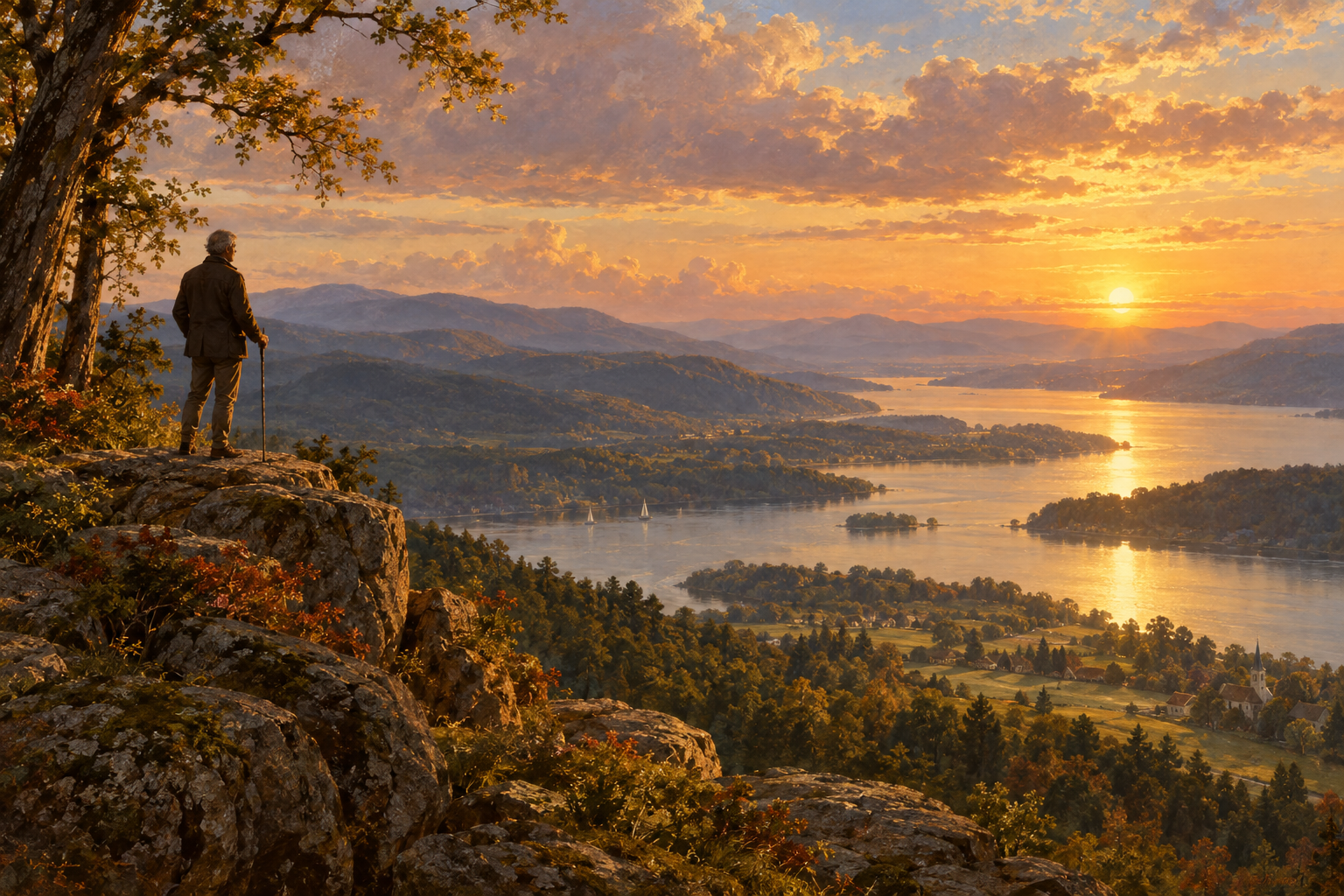
My new book, “Considerations in the Final Third of Life” explores the human condition. It not easy being human. We are caught in a peculiar dilemma: we are part of nature and yet apart from it. We possess powerful reasoning, profound creativity, scientific insight, and self-awareness — and this creates a split between our grand dreams and our fragile bodies. But we are unique among living beings in one respect above all others: we alone are aware of our own future demise.
Every other creature on earth lives entirely inside the present moment. A dog does not know it is dying. A horse in its final season grazes with the same unhurried confidence it had in its first. Mortality as an idea, rather than an instinct, belongs to us alone. We are the only species that carries around, every day, a working model of our own mortality — and that model, more than almost anything else about us, is silently steering what we want, who we call, what we forgive, and what we no longer have the patience to pretend matters.
This is not a minor psychological footnote. It may be the single most powerful, least visible force governing human behavior. And yet we spend most of our lives refusing to look at it. The Dalai Lama captured the paradox perfectly: “Men live as if they were never going to die, and die as if they had never lived.”
Modern life affords us the distractions and the where with all to live in denial. We live inside rituals and routines disconnected from our own awareness. We analyze our feelings more than we experience them. We categorize the people around us more than we are present with them. We stand in judgment when we could stand in connection. We postpone living until conditions are perfect, forgetting that perfection is the enemy of getting things done — and of happiness itself.
Then, somewhere in the later decades, perspective breaks through. Consider the executive who spends ten years chasing a title, and twenty years later walks past three career opportunities to make it to a grandchild’s recital. The difference is not a change of character. It is a change of perspective caused by aging: a future that once felt like an open field now feels like a hallway. When the horizon becomes visible, awareness stops being a spiritual luxury and becomes the most practical — and most democratic — skill a person can cultivate. It requires no money, no credentials, and no permission. It requires only attention, honestly paid.
This is the territory of my book, Considerations in the Final Third of Life. I wrote it as part of my investigation of the final third stage of life as advance work for my arrival: not a manual, and not a comfort, though I hope it brings some of both.
The book follows the metaphor of the river. Time flows continuously forward; we float within it, and every bend of the journey shapes who we become. By the final third, we are within sight of the sea — and for the first time in our adult lives, we are free. Free from the rat race, free from the audience we performed for, free to ask the questions we deferred for forty years. Who are we beneath the roles? What do we do with our regrets? What do we believe about God, death, and what may lie beyond? How do we prepare — practically, medically, financially, spiritually — for the years when aging stops whispering and starts to shout?
I hope you find this book as meaningful as I think it could be for the ordinary reader!